




Executive Summary
Article Highlights
As we head into 2026, the digital landscape has shifted from a “search engine” world to an “answer engine” world. For the C-Suite, SEO is no longer a technical line item managed by the marketing department; it has evolved into a high-leverage strategic asset that dictates brand authority, customer trust, and long-term profitability.
In 2026, visibility isn’t just about “ranking #1 on Google.” It’s about being the trusted source cited by AI agents, voice assistants, and generative search overviews.
Executive Highlights
From Clicks to Citations: In 2026, “Zero-Click” searches are the norm. Success is measured by how often AI models (like Google’s Gemini or OpenAI’s Search) cite your brand as the definitive authority.
The Trust Premium: As AI-generated “noise” floods the internet, search engines are ruthlessly prioritizing E-E-A-T (Experience, Expertise, Authoritativeness, and Trustworthiness).
Compounding ROI: While paid acquisition costs continue to rise due to privacy regulations, organic authority remains a compounding asset that lowers your blended Customer Acquisition Cost (CAC).
1. Solving for User Intent, Not Just Volume

User Intent
- The Strategy: Map your content to the four intent categories: Information (Know), Navigational (Go), Commercial (Investigate), and Transactional (Buy).
- The Goal: Instead of one page trying to rank for ten keywords, create specific experiences that answer the “Why” behind the search. If a user asks “How to scale a SaaS,” they want a guide; if they search “SaaS scaling tools,” they want a comparison.
2. The Power of Topical Authority

- The Strategy: Build Topic Clusters. Create one exhaustive “Pillar Page” & surround it with dozens of “Spoke” articles that dive deep into sub-topics.
- The Goal: By interlinking these pages, you signal to AI models that your site is a definitive source of truth, making it much harder for competitors to outrank you with single, high-budget ads.
3. Understanding Entities:Helping AI Connect the Dots
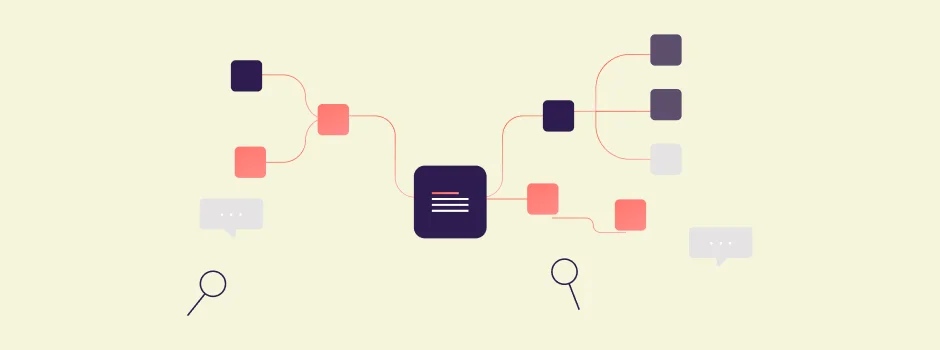
- The Strategy: Use Semantic Optimization. Mention related entities naturally. If you are writing about “Electric Cars,” you should mention “Lithium Batteries,” “Charging Stations,” and “Sustainable Energy.”
- The Goal: Helping search engines “triangulate” your brand within the global Knowledge Graph. This is how you get recommended by AI assistants even when your exact brand name isn’t searched.
4. E-E-A-T: The Only Shield Against AI Noise
As AI-generated “noise” floods the web, search engines have raised their “trust filters.” E-E-A-T (Experience, Expertise, Authoritativeness, and Trustworthiness) is now a quantifiable ranking factor.

- The Strategy: Shift from generic blogging to Thought Leadership SEO. Highlight real-world experience, use verified author bylines, and include original data that AI cannot scrape or hallucinate.
- The Goal: To prove a human with real-world expertise is behind the content. In 2026, your leadership team’s personal brand is a direct ranking factor for your company’s visibility.
5. The Shift to “Search Everywhere” Optimization

- The Strategy: Adopt Search Everywhere Optimization (SEvO). This means optimizing your brand’s data to be ingested by Large Language Models (LLMs) and social algorithms alike.
- The Goal: Omnichannel visibility. If an AI assistant or a social algorithm can’t find a structured version of your value proposition, you effectively don’t exist in the modern buyer’s journey.
6. Agentic Commerce and Technical Precision

- The Strategy: Your technical foundation must be flawless. This includes Advanced Schema Markup (the digital ID card for your products) and Core Web Vitals (loading in under 2 seconds).
- The Goal: To be “purchasable” by AI agents. If your data isn’t machine-readable, you’ll be bypassed for a competitor whose technical SEO is more “agent-friendly.”
The Bottom Line: The ROI of Planned SEO in 2026
Traditional advertising is a “pay-to-play” model where the moment you stop spending, the leads disappear. Strategic SEO is a “build-to-own” model.
In 2026, the companies with the highest margins will be those that don’t have to buy every single click. By building Topical Authority, you create a “moat” that competitors cannot easily replicate with a larger ad budget.
| Metric | Traditional PPC (Ads) | Strategic SEO (2026) |
|---|---|---|
| Cost Basis | Linear (Pay per click) | Sunk cost with compounding returns |
| Asset Value | Temporary | Permanent Brand Equity |
| Trust Factor | Low (Labeled as Ad) | High (Third-party AI Citation) |
| Durability | Zero (Stops with budget) | High (Resistant to market fluctuations) |
Your 2026 SEO Action Plan
FAQ
1. What is zero-click search?
2. What is Answer Engine Optimization (AEO)?
3. Is keyword SEO really dead?
4. What is SEO 2.0?
5. How do AI search engines decide what content to show?
AI search systems evaluate:
- Entity relationships
- Structured data implementation
- Topical authority depth
- E-E-A-T signals (Experience, Expertise, Authority, Trust)
- Clarity and extractability of answers
Content that is structured, authoritative, and intent-aligned is more likely to be selected.
6. How can I optimize for zero-click search?
To optimize for zero-click visibility:
- Structure content for direct answers
- Use schema markup (FAQ, HowTo, Article)
- Build topical clusters
- Optimize for featured snippets
- Strengthen entity connections
- Improve E-E-A-T signals
7. Why is topical authority more important than keywords?
8. Does zero-click search reduce website traffic?
9. What role does structured data play in SEO 2.0?
10. Is AI replacing traditional SEO?
Recent Posts
Mastering the Invisible Click: A Practical Guide to Zero-Click Search Optimization
Mastering the Invisible Click: A Practical Guide to Zero-Click Search Optimization

Stop the Leaks: The Ultimate 22-Point Checklist for a High-Converting Landing Page
Stop the Leaks: The Ultimate 22-Point Checklist for a High-Converting Landing Page